
AI agents for Norwegian businesses: From chatbot to autonomous co-worker
2026 is the year AI agents evolve from simple chatbots to autonomous co-workers. Learn what AI agents are, the different types, practical use cases for Norwegian businesses, and how to implement them safely in existing systems.
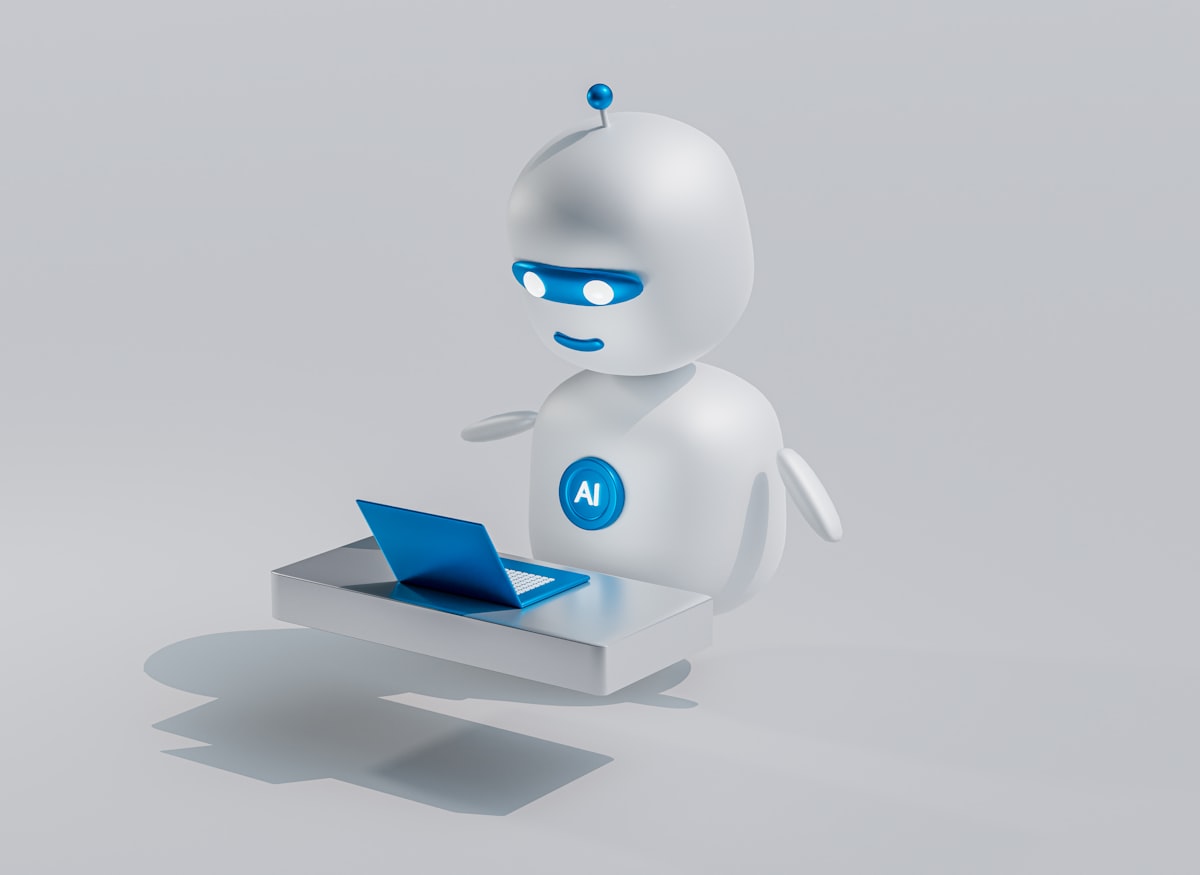
In 2026, we are no longer talking about chatbots. We are talking about AI agents — autonomous digital co-workers that can plan, reason, use tools, and execute complex tasks with minimal human intervention. For Norwegian businesses, this represents a fundamental shift in what artificial intelligence can do for their operations.
But what exactly is the difference between a chatbot and an AI agent? What types of agents exist? And how can Norwegian businesses adopt this technology in a safe and legally compliant way?
From chatbot to AI agent: What is the difference?
A traditional chatbot follows predefined rules and answers questions based on a knowledge base. It is reactive — it waits for input and provides a response. An AI agent, on the other hand, is proactive. It can set goals, make plans, use external tools, and adapt its strategy based on the results it encounters along the way.
| Property | Traditional chatbot | AI agent |
|---|---|---|
| Interaction model | Reactive — answers questions | Proactive — plans and acts |
| Memory | Limited to conversation window | Long-term memory across tasks |
| Tool use | None or limited | Can use APIs, databases, code |
| Reasoning | Pattern recognition | Multi-step reasoning and planning |
| Autonomy | Requires step-by-step instructions | Can break down and solve tasks independently |
| Error handling | Fails on unknown situations | Can adapt and try alternative strategies |
| Integration | Standalone channel | Integrated into business processes |
Think of it this way: a chatbot is a receptionist who can answer common questions. An AI agent is a knowledge worker who can investigate a case, find relevant documents, contact the right person, and follow up until the task is resolved.
Types of AI agents
Not all AI agents are equal. Research literature distinguishes between several types based on complexity and capability:
1. Simple reflex agent
Acts based on current input without considering history. Example: a rule-based email sorting system that routes inquiries to the correct department based on keywords.
2. Model-based agent
Builds an internal model of its environment and makes decisions based on this understanding. Example: an inventory monitoring system that understands seasonal patterns and adjusts orders accordingly.
3. Goal-based agent
Has defined goals and plans actions to achieve them. Example: a recruitment agent that finds candidates, screens CVs, and coordinates interviews to fill a position.
4. Utility-based agent
Optimizes for the best possible outcome among multiple alternatives. Example: a pricing system that balances profit margins, competitiveness, and customer satisfaction.
5. Multi-agent system
Multiple agents collaborating to solve complex tasks. Example: a customer service solution where one agent handles billing questions, another handles technical support, and a third coordinates escalations — all with an overarching orchestration agent.
Maturity levels: Where is your business?
The transition from chatbot to fully autonomous agent does not happen overnight. We use a four-level maturity model to help businesses map where they are and where they should aim:
| Level | Label | Description | Example |
|---|---|---|---|
| 1 | Assisted | AI provides suggestions, humans execute | Chatbot suggesting responses to customer service |
| 2 | Semi-autonomous | AI performs tasks with human approval | Agent drafting email responses for review |
| 3 | Autonomous with oversight | AI acts independently, humans monitor | Agent handling routine customer inquiries on its own |
| 4 | Fully autonomous | AI handles end-to-end processes | Multi-agent system managing the entire order process |
Most Norwegian businesses today are at levels 1–2. The goal is not necessarily to reach level 4 for everything — it is about identifying which processes have the greatest potential for benefit.
Practical use cases for Norwegian businesses

AI agents already have real-world use cases across industries in Norway:
Customer service and support
Agents that do not just answer questions, but can log into systems, look up order status, process complaints, and initiate returns — all without human intervention for routine cases. For Norwegian businesses, it is crucial that the agent handles Norwegian fluently and understands Norwegian business culture.
Document processing and compliance
Norwegian businesses handle large volumes of documentation — contracts, invoices, regulatory reports. AI agents can read, classify, extract key information, and flag discrepancies. With the upcoming AI Act, having control over document flows becomes even more important.
Code review and software development
AI agents can review pull requests, identify security vulnerabilities, suggest improvements, and write tests. They do not replace developers, but free up time for more creative work.
Data analysis and business intelligence
Agents that can connect to databases, run queries, create visualizations, and present insights — all driven by natural language. A manager can ask "How did sales in Northern Norway compare to last year's quarter?" and receive a complete answer with charts.
Supply chain optimization
For businesses with complex value chains, AI agents can monitor suppliers, predict delays, suggest alternative routes, and automatically adjust orders based on real-time data.
Implementation: How to integrate AI agents into existing systems
The biggest challenge for Norwegian businesses is not the technology itself, but the integration with existing systems. Here are the most common integration patterns:
API gateway pattern
The agent communicates with business systems through a dedicated API layer. This provides control over which data and actions the agent has access to, and makes it easier to implement security and logging.
Event-driven architecture
The agent reacts to events in business systems — a new order, a customer inquiry, a status change. This works well for processes that require fast response and can run asynchronously.
Orchestration layer
For multi-agent systems, an orchestration layer is needed to coordinate agent activities, handle error situations, and ensure tasks are completed. We see that many Norwegian businesses benefit from system integration services to build robust orchestration layers.
Risks and considerations
AI agents introduce new risks that Norwegian businesses must manage:
Hallucinations and misinformation
AI agents can generate plausible but incorrect responses. For autonomous agents, this is particularly critical because errors can propagate through multiple actions before being detected. The solution is validation, human oversight on critical decisions, and clear boundaries for what the agent can do independently.
Privacy and GDPR
Norwegian businesses are subject to GDPR, and AI agents that process personal data must have a valid legal basis. Data sovereignty is an important topic — many Norwegian businesses prefer that data remains within the EEA, which affects the choice of AI platform and infrastructure.
Bias
AI agents inherit biases from their training data. For Norwegian businesses using agents in recruitment, credit assessment, or other decision-making processes, it is legally required to document and address biases — especially under the upcoming AI Act.
Norwegian language understanding
Many AI models have limited understanding of Norwegian, especially Nynorsk and dialect variants. For agents that will serve Norwegian customers, it is important to choose models with strong Norwegian language support and test thoroughly with Norwegian input. The National Library of Norway's NorGPT and similar initiatives are contributing to better Norwegian language technology.
Data sovereignty
Norwegian authorities and several industries have requirements for where data is stored and processed. When AI agents send data to cloud services, you must ensure this complies with Norwegian and European regulations.
How we can help
At UNOS SOFTWARE AS, we have broad experience building intelligent systems for Norwegian businesses. We help with the entire journey from strategy to production:
- Assessment and consulting — we analyze your processes and identify where AI agents deliver the greatest value, through our technical consulting service
- Development and integration — we build custom agent solutions that integrate with your existing systems, through our software development service
- System integration — we connect AI agents to your business systems with secure APIs and robust integration patterns, through our system integration service
AI agents are not science fiction — they are a practical tool that Norwegian businesses can adopt today. But it requires the right strategy, a solid technical foundation, and deliberate risk management.
Ready to explore what AI agents can do for your business? Get in touch for an informal conversation about the possibilities.
Sources and further reading
- Anthropic (2025). "Building effective agents." anthropic.com
- Google DeepMind (2025). "A survey on large language model based autonomous agents." arxiv.org
- Datatilsynet (2025). "Guide on artificial intelligence and privacy." datatilsynet.no
- National Library of Norway (2025). "NorGPT and Norwegian language technology." nb.no
- European Commission (2025). "AI Act Implementation Timeline." digital-strategy.ec.europa.eu
- OECD (2025). "AI Policy Observatory — Norway." oecd.ai